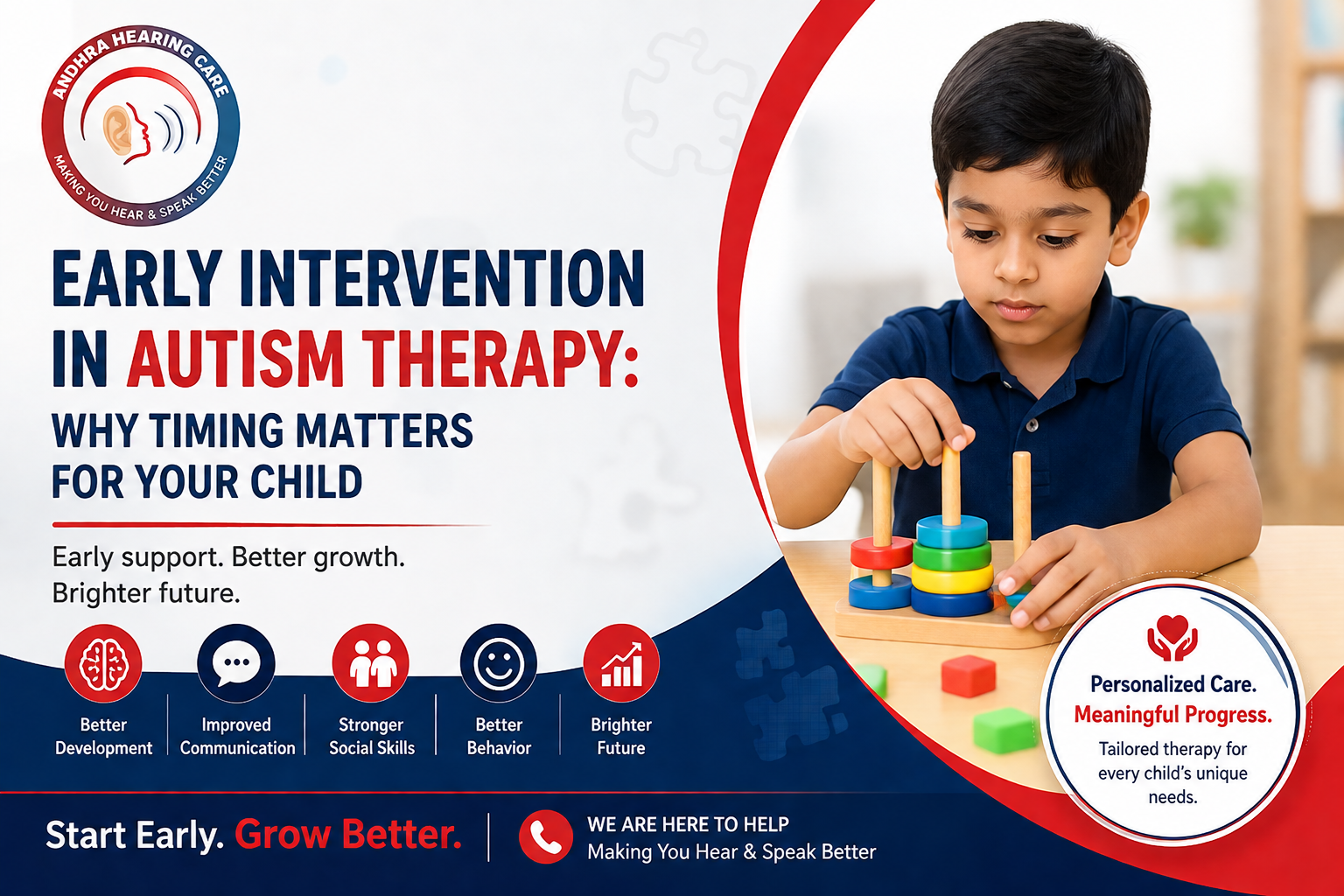
When it comes to Autism therapy, one thing matters more than anything else, timing.
Early intervention is not just helpful. It is life-changing.
Research shows that children who receive early autism therapy show significantly better improvement in communication, social behavior, and daily life skills.
If you are a parent wondering whether to start therapy now or wait, here is the truth, waiting only delays progress.
What is Early Intervention in Autism Therapy?
Early intervention means starting therapy during the most critical years of brain development, usually before the age of 6.
At this stage, a child’s brain is highly adaptable, making it easier to:
- Learn communication skills
- Improve social interaction
- Develop behavior control
Think of it like wet cement. Shape it early, and it sets strong.
Why Early Autism Therapy is So Important
1. Faster Brain Development
A child’s brain develops rapidly in early years, forming millions of connections. Early therapy uses this window to build essential skills.
2. Better Communication Skills
Many children with autism struggle to express themselves. Early therapy helps them:
- Speak clearly
- Understand language
- Use gestures or alternative communication
3. Improved Social Skills
Early therapy teaches children how to:
- Make eye contact
- Understand emotions
- Interact with others
4. Reduced Behavioral Challenges
Therapy helps children manage:
- Tantrums
- Repetitive behaviors
- Sensory issues
5. Long-Term Independence
Children who receive early intervention often grow into more independent individuals.
Types of Early Autism Therapy
Speech Therapy
Focuses on improving communication skills.
Behavioral Therapy (ABA)
Helps children learn positive behaviors and reduce negative ones.
Occupational Therapy
Improves daily living skills like eating, dressing, and coordination.
Social Skills Training
Helps children interact better with peers.
All these therapies work together to support overall development.
Signs Your Child May Need Autism Therapy
Parents often notice signs early but ignore them thinking “they will grow out of it.”
Watch for:
- Delayed speech
- Lack of eye contact
- Repetitive behaviors
- Difficulty socializing
- Not responding to name
If you notice these signs, act early.
How Early Therapy Helps Families Too
Let’s be real, autism doesn’t just affect the child, it affects the entire family.
Early therapy:
- Reduces stress for parents
- Improves family communication
- Provides guidance on handling behavior
It’s not just therapy for the child. It’s support for the whole home.
Role of Professional Therapy Centers
A structured therapy environment plays a huge role in success.
At Andhra Hearing Care, personalized therapy plans are designed based on each child’s needs, focusing on communication and behavioral improvement.
This kind of tailored approach is what actually works.
Conclusion
Early intervention in Autism therapy is not optional. It is essential.
The earlier you start:
- The better the results
- The smoother the development
- The stronger the future
So if you’re thinking “Should I start now?”
The answer is simple. Start today.